Caffeine, Alcohol and Sleep Architecture. Timing matters.
Editorial team, Drenval
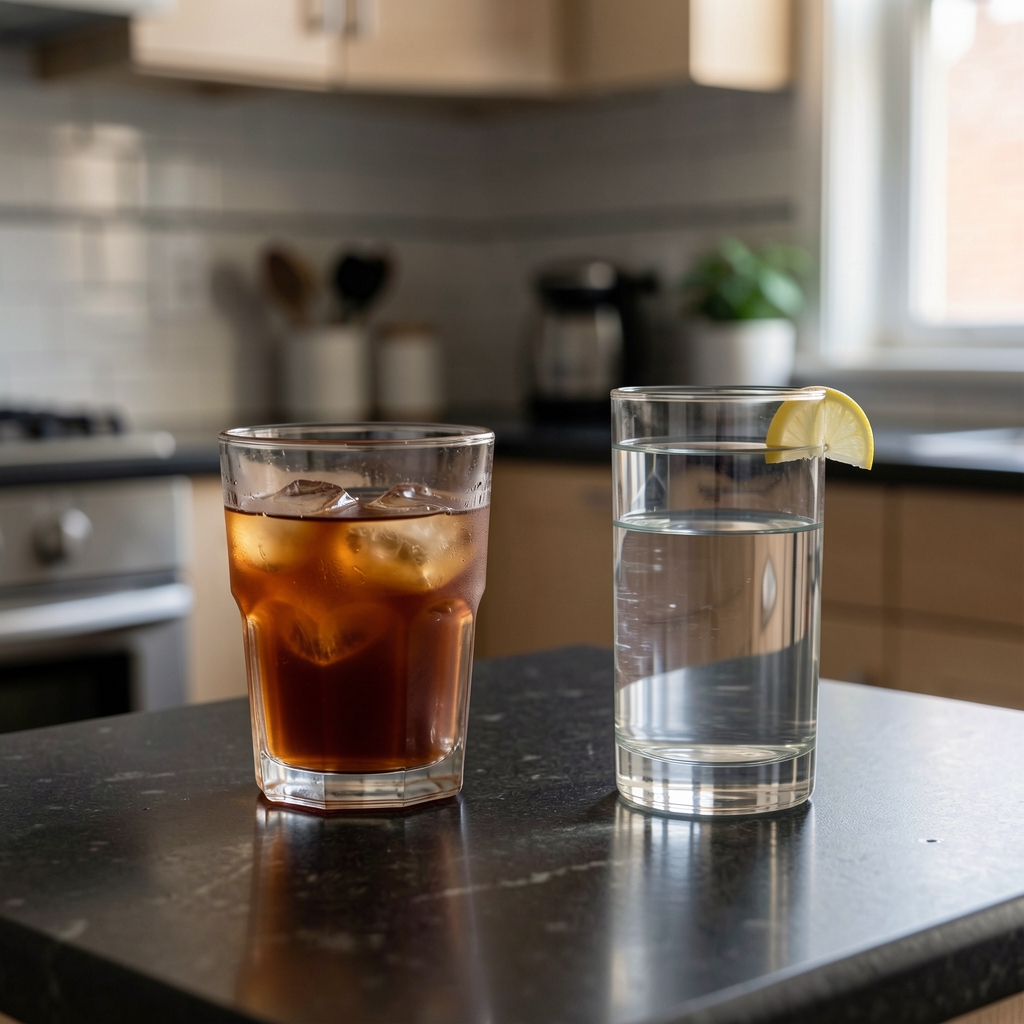
Caffeine and alcohol are familiar parts of social and working life, but their timing can influence how a night feels. The relationship is not identical for every man: sensitivity, amount, food, schedule and habit all matter. This evidence-informed guide explains why a late coffee may feel different from an early one, why alcohol can make someone drowsy without creating a steady night, and how to think about observations without turning them into a rigid rule. The focus is sleep architecture and context, not judgement. If sleep concerns continue or affect daily life, speak with a GP or qualified healthcare professional.
Caffeine has a long tail
Caffeine can remain active for several hours, though the time course varies between individuals based on metabolism, body size and habitual intake. An afternoon drink may fit one person and disturb another. Track timing rather than only counting cups, and remember that tea, energy drinks, chocolate and some pre-workout products can contribute meaningfully to a daily total.
Alcohol and the first part of the night
Alcohol can change the feeling of falling asleep while also affecting later sleep continuity. A night may seem easy at first and less settled afterwards. This is one reason a single bedtime impression — "that drink helped me sleep" — can miss the wider pattern that unfolds over several hours.
Social timing
Friday and Saturday routines are often different from weekdays. A later meal, bright venue and changed wake time can combine with drinks or coffee in ways that make it hard to isolate any single factor. Comparing like with like — a quiet Tuesday against another quiet Tuesday — gives a more useful picture than comparing a weekend night to a weekday one.
Reading your own pattern
Rather than adopting a fixed cut-off time copied from an article, it can be more useful to note your own last caffeine and last alcoholic drink alongside how the following night felt, across a few weeks. Patterns that hold up across multiple observations are more trustworthy than a single memorable night, good or bad.
Common evening scenarios
This table offers general, descriptive suggestions for reflection — it is not a personalised recommendation and does not account for individual health conditions or supplement routine.
| Scenario | General consideration |
|---|---|
| Coffee after an early dinner | May still be active into the evening for some people; worth tracking against how the night feels |
| A drink or two at a late social event | May ease the feeling of falling asleep while affecting continuity later in the night |
| An energy drink during a late shift | Often overlooked as a caffeine source; timing relative to the end of the shift matters |
| A quiet evening with water only | Useful as an occasional comparison point against a typical evening |
How timing tends to layer up
- Afternoon
Last caffeinated drink
Note roughly when this happens rather than only how many cups you had.
- Early evening
Meal timing
A late, heavy meal can interact with both caffeine and alcohol's effects on the evening.
- Later evening
Alcohol, if any
Consider how much and how close to your usual bedtime.
- Bedtime onward
How the night unfolds
Falling asleep quickly is only part of the picture — continuity across the night matters too.
Before you change anything
Is there a single safe cut-off time for caffeine?
No single time suits everyone; sensitivity varies, which is why tracking your own pattern is more useful than adopting a number from an article.
Does alcohol help me sleep?
It may ease the feeling of falling asleep for some people while affecting the later part of the night, so the full picture is more nuanced than a single impression.
What if I notice a persistent problem?
Speak with a GP or qualified healthcare professional, especially if difficulty sleeping is frequent or affecting your daily life.
Editorial notice
"Track timing, not just quantity — the hour matters as much as the amount."
— Drenval editorial note
This article is for informational purposes only and does not constitute medical advice. Always consult your GP or a qualified healthcare professional before making changes to your diet, supplements, or lifestyle. Drenval accepts no responsibility for actions taken without professional medical guidance.